

Farm Mechanisation Transport in Zimbabwe: Local, Inbound and Outbound Route Planning
June 15, 2026 | by Wyvernfreight
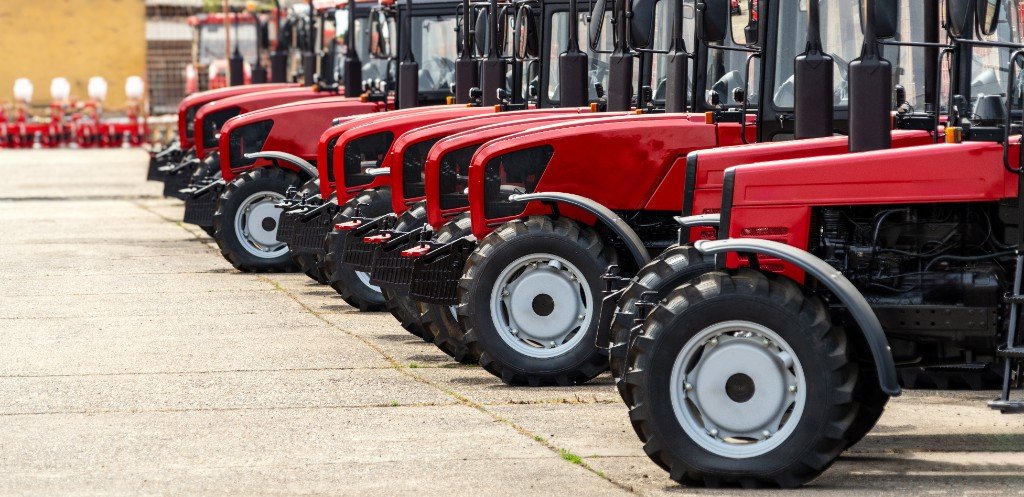
Farm mechanisation is becoming one of the most important drivers of agricultural growth in Zimbabwe, and as investment in tractors, planters, harvesters, sprayers and implements rises, the need for reliable transport rises with it.
A tractor or combine harvester cannot help a farmer if it is delayed at the border, damaged during transport, stuck on a narrow farm road, or delivered without the correct offloading plan. Farm mechanisation requires strong logistics planning from supplier to farm, from depot to district, and from one production area to another.
At Wyvern Freight, we support farm mechanisation by helping customers move agricultural machinery, implements, spares and support equipment safely across Zimbabwe and the region.
Why farm mechanisation needs proper transport planning
Farm machinery is often heavy, wide, tall, delicate or expensive. Some equipment can be driven short distances, but most long-distance movement requires proper trailers. The wrong transport choice can cause damage, road-safety problems, delays and unnecessary costs.
Good mechanisation transport planning should focus on
- Correct trailer selection.
- Accurate machinery dimensions and weight.
- Safe loading and offloading.
- Protection of hydraulic pipes, tyres, cabins and electronics.
- Route planning for bridges, low-clearance areas and narrow roads.
- Farm access roads and turning space.
- Border documentation for imported machinery.
- Delivery timing before planting, spraying or harvesting.
- Availability of cranes, ramps, forklifts or farm loaders.
- Driver experience with abnormal or machinery cargo.
Farm mechanisation logistics is about making sure the machine arrives ready to work, not just arriving. Movement can be grouped into three categories: local distribution routes, inbound supply routes, and outbound project routes.
Supplier to farm and district
Tractors, implements and harvesters moving from Harare and dealers to farms and contractors across every province.
Imported machinery
Tractors, implements, sprayers and spares routed from borders and regional dealers to final farm destinations.
Project and regional cargo
Machinery, spares and rental equipment moving toward Beitbridge, Forbes, Nyamapanda, Chirundu and Plumtree.
Local delivery route
Border post
Delivery hub
Main types of farm mechanisation cargo
Farm mechanisation cargo can include many different types of equipment.
Tractors
Tractors are the backbone of mechanised farming. They are used for land preparation, planting, spraying, harvesting support, trailer pulling and general farm work. Depending on size, tractors may require a flat deck, step deck or lowbed trailer.
Combine harvesters
Combine harvesters are large, heavy and high-value machines. They often require lowbed transport, careful route planning and proper loading support. Header attachments may need to move separately.
Planters and seed drills
Planters and seed drills can be wide and delicate. They need careful securing to protect seed boxes, wheels, discs and hydraulic systems.
Ploughs, rippers, harrows and cultivators
Land-preparation implements are heavy and awkward in shape. Flat decks and lowbeds are commonly used, depending on the size and weight.
Sprayers
Boom sprayers, tractor-mounted sprayers and self-propelled sprayers need careful loading because booms, tanks, pumps and control systems can be damaged during transport.
Threshers, shellers and post-harvest equipment
Threshers, shellers, graders, mills and post-harvest machines are important for reducing losses and improving crop handling. They may be transported on flat decks, box trucks or curtainsiders depending on size and sensitivity.
Trailers, water bowsers and farm support equipment
Farm trailers, bowsers, tanks, pumps, generators, compressors and workshop equipment also form part of mechanisation logistics.
Local farm mechanisation routes within Zimbabwe
Local routes connect machinery suppliers, government depots, contractors, estates, commercial farms, smallholder schemes and agricultural districts across Zimbabwe.
Harare to Mashonaland West
Mashonaland West is one of Zimbabwe’s important crop-production regions. Equipment may move from Harare to Chinhoyi, Banket, Karoi, Chegutu, Kadoma, Norton and surrounding farming areas. Common cargo includes tractors, planters, combine harvesters, ploughs, rippers, sprayers, grain trailers and irrigation equipment.
Harare to Mashonaland Central
Mashonaland Central routes include Bindura, Mazowe, Mvurwi, Guruve, Shamva, Mount Darwin and surrounding areas. These routes are important for tobacco, maize, soya bean, horticulture and mixed farming operations. Machinery deliveries may include tractors, planters, tobacco equipment, trailers, boom sprayers, pumps and post-harvest machinery.
Harare to Mashonaland East
Mashonaland East routes connect Harare with Marondera, Murehwa, Mutoko, Wedza, Goromonzi and nearby farming districts. Because many farms are close to Harare, delivery timing can be flexible, but farm-road access and offloading still need to be confirmed.
Harare to Manicaland
Manicaland routes include Mutare, Rusape, Nyazura, Chipinge, Chimanimani and surrounding areas. Machinery may be delivered to estates, horticulture operations, tea and fruit producers, smallholder schemes and crop farms. For hilly or remote areas, route planning is important because some equipment may be wide, tall or difficult to manoeuvre.
Midlands mechanisation routes
The Midlands province is central to Zimbabwe’s transport network. Routes include Gweru, Kwekwe, Mvuma, Shurugwi, Gokwe and surrounding districts. Machinery can move from Harare, Bulawayo or Beitbridge-linked routes into farms and contractors’ yards. The Midlands is also useful for redeploying machinery between provinces during planting and harvesting seasons.
Masvingo and Lowveld routes
Masvingo, Chiredzi, Triangle, Hippo Valley, Mwenezi and surrounding areas are important for irrigation farming, sugarcane, livestock feed production and commercial agriculture. Machinery transported into this region may include tractors, cane equipment, irrigation equipment, pumps, trailers, harvesters and earthmoving support machinery. Long distances, heat and access roads must be considered when planning delivery.
Bulawayo and Matabeleland routes
Bulawayo is a major logistics hub for western Zimbabwe. Equipment can move from Bulawayo to Gwanda, Plumtree, Lupane, Hwange, Victoria Falls, Filabusi, Maphisa and surrounding farming or livestock areas. Machinery cargo in this region may include tractors, balers, livestock feed equipment, water bowsers, fencing equipment, pumps and trailers.
Inbound routes for farm mechanisation equipment
Many tractors, implements, spares and agricultural machines are imported or supplied through regional trade corridors. Inbound mechanisation logistics must include customs clearance, border coordination, correct trailer choice and safe final delivery.
South Africa to Zimbabwe via Beitbridge
Beitbridge is one of Zimbabwe’s most important inbound routes for farm machinery. Tractors, implements, harvesters, sprayers, pumps, irrigation equipment, trailers and spare parts can enter Zimbabwe through Beitbridge. From Beitbridge, cargo can move to Masvingo, Harare, Bulawayo, Midlands, Mashonaland, Manicaland and Matabeleland. This route is especially important for machinery coming from South African suppliers, ports and regional dealers.
Mozambique to Zimbabwe via Forbes
The Forbes border near Mutare connects Zimbabwe to Mozambique and the Beira Corridor. This route can support machinery and equipment arriving through Beira or regional suppliers. From Forbes, cargo can move through Mutare, Rusape, Marondera and Harare, then onward to farming districts across the country.
Zambia to Zimbabwe via Chirundu
The Chirundu route supports machinery, implements and spares moving between Zambia and Zimbabwe. Cargo entering through Chirundu can move through Karoi, Chinhoyi and Harare, then onward to farming areas in Mashonaland, Midlands and other provinces.
Botswana to Zimbabwe via Plumtree
The Plumtree route supports farm machinery and equipment entering western Zimbabwe. From Plumtree, cargo can move to Bulawayo, Matabeleland, Midlands, Masvingo and other destinations.
Other entry points
Depending on supplier location and final destination, machinery may also move through Nyamapanda, Sango, Kazungula or Victoria Falls. The best route depends on cargo size, border conditions, permits and final delivery location.
Outbound farm mechanisation routes
Outbound mechanisation transport may include moving tractors, implements, spares, used machinery, rental equipment or project machinery from Zimbabwe to neighbouring countries. It can also include redeploying machinery between farms, contractors and agricultural projects.
Zimbabwe to South Africa via Beitbridge
The Beitbridge route can support farm machinery, spares and equipment moving from Zimbabwe into South Africa or South Africa-linked regional supply chains.
Zimbabwe to Mozambique via Forbes or Nyamapanda
The Forbes and Nyamapanda routes can support farm equipment, irrigation machinery and agricultural project cargo moving into Mozambique.
Zimbabwe to Zambia via Chirundu
The Chirundu route supports northbound machinery and spares moving into Zambia or regional agricultural projects.
Zimbabwe to Botswana via Plumtree
The Plumtree route supports machinery and farm equipment moving from western Zimbabwe into Botswana and surrounding regional markets.
The best trailer for farm mechanisation transport
The best trailer depends on the size, weight and shape of the machinery.
Heavy farm machinery: lowbed trailer
For large tractors, combine harvesters, heavy sprayers, loaders and oversized agricultural equipment, the best trailer is usually a lowbed.
A lowbed trailer offers
- Lower loading height.
- Better clearance for tall machinery.
- Strong load capacity.
- Safer movement of heavy equipment.
- Better stability for oversized cargo.
- Easier loading of machinery with ramps.
Lowbeds are ideal for heavy and high-value machines that cannot safely travel long distances by road on their own wheels.
Tractors and medium implements: flat deck trailer
A flat deck trailer is useful for tractors, ploughs, rippers, harrows, cultivators, planters, trailers and other general farm machinery. Flat decks are practical because they allow side loading, crane or forklift loading, flexible cargo placement, easy securing with chains and straps, and transport of mixed machinery loads. They are especially useful for moving implements from dealers to farms.
Tall or wide equipment: step deck trailer
A step deck trailer is useful when machinery is too tall for a normal flat deck but does not require a full lowbed. It can be suitable for sprayers, planters, tractors with cabins and some mounted implements.
Long implements: extendable trailer
Some planters, irrigation booms, pipe trailers, long frames and wide implements may require an extendable trailer. This helps reduce unsafe overhang and improves load support.
Spares and sensitive components: curtainsider or box trailer
Farm machinery spares, engines, pumps, gearboxes, hydraulic parts, filters, belts, electronics and control panels should be protected from rain and dust. A curtainsider or box trailer is usually best for electronic control units, hydraulic components, spare engines, pumps and motors, bearings and belts, precision planter parts, sprayer components and workshop tools.
Small mechanisation equipment: box truck or light-duty flatbed
Two-wheel tractors, small threshers, shellers, small planters, generators and small pumps can often move on box trucks, light-duty flatbeds or small trailers. These are useful for rural mechanisation programmes and smaller farm deliveries where a large truck may not be practical.
Wyvern Freight’s recommendation
For farm mechanisation logistics in Zimbabwe, Wyvern Freight recommends matching the trailer to the equipment:
- Large tractors and combine harvesters: lowbed trailer.
- Medium tractors and implements: flat deck trailer.
- Tall sprayers and machinery: step deck trailer.
- Long or wide implements: extendable trailer.
- Spare parts and sensitive components: curtainsider or box trailer.
- Small machinery: box truck or light-duty flatbed.
- Mixed project cargo: combination of flat deck, lowbed and enclosed transport.
For most heavy machinery a lowbed is the best overall choice; for general implements a flat deck is practical and flexible; for spares and sensitive components, enclosed transport is safer.
Wyvern Freight
Loading, offloading and site-access planning
Farm machinery deliveries must be planned before the truck arrives. Some farms and schemes may not have cranes, loading bays or strong ramps. Some roads may be narrow, muddy or difficult for long trailers.
Before dispatch, confirm
- Machine weight and dimensions.
- Loading method at collection point.
- Offloading method at destination.
- Access road condition.
- Gate width and turning space.
- Bridge and powerline clearance.
- Availability of ramps, cranes or farm loaders.
- Contact person at the farm.
- Safe parking and storage area.
- Delivery timing in relation to planting or harvesting.
Good offloading planning protects the machine and reduces delays.
Why choose Wyvern Freight for farm mechanisation logistics?
Farm mechanisation depends on timing. Planting equipment must arrive before planting. Sprayers must arrive before pest and weed pressure gets out of control. Harvesters must arrive before crop losses begin. Spares must arrive quickly to reduce downtime.
- Tractor and implement transport.
- Combine harvester movement.
- Farm machinery imports.
- Cross-border equipment logistics.
- Machinery redeployment between farms.
- Spare-parts transport.
- Agricultural project cargo.
- Trailer selection.
- Route planning to farms and schemes.
- Delivery updates and professional communication.
From Beitbridge to Harare, from Forbes to Mutare, from Chirundu to Karoi, from Bulawayo to Matabeleland, and from Harare to farms across Mashonaland, Wyvern Freight helps move farm mechanisation equipment safely and efficiently.
Conclusion
Farm mechanisation is essential for improving productivity, reducing labour pressure and strengthening agricultural output in Zimbabwe. But machinery only creates value when it reaches the farm safely, on time and ready to work.
Lowbeds are best for heavy machinery. Flat decks are practical for tractors and implements. Step decks and extendable trailers are useful for tall or long equipment. Curtainsiders and box trailers protect sensitive spares and components. For dependable farm mechanisation transport in Zimbabwe, partner with Wyvern Freight, moving machinery, supporting farmers and helping agriculture grow.
RELATED POSTS
View all

Agricultural Inputs Transport in Zimbabwe: Local, Inbound and Outbound Route Planning
June 15, 2026 | by Wyvernfreight
Livestock Solutions in Zimbabwe: Transport, Feed, Cold Chain and Route Planning
June 15, 2026 | by Wyvernfreight

Soya Bean Production Transport in Zimbabwe: Local, Inbound and Outbound Route Planning
June 15, 2026 | by Wyvernfreight