Vehicle or cargo condition review
Confirm the asset type, condition, dimensions, protection needs, and handling requirements before movement.

New and used vehicles, spare parts, tyres, and containerised components moved from port and border to dealership and workshop.
Automotive logistics protects high-value, damage-sensitive vehicles and components from collection through to the dealership, workshop, fleet depot, or final customer.
We plan around the actual asset—its condition, movement documents, loading method, route, and delivery requirements—not a generic freight lane.

We coordinate the checks, documents, equipment, and delivery timing that help automotive cargo arrive ready for its next use.
Confirm the asset type, condition, dimensions, protection needs, and handling requirements before movement.
Align collection details, route, documentation, customs needs, insurance coordination, and delivery timing.
Match the carrier, loading approach, securing, and cargo protection to the actual vehicle or component.
Coordinate a clear final handover to the dealership, workshop, fleet depot, warehouse, or customer.
Our planning supports vehicles, automotive parts, supply locations, and final delivery points throughout the regional automotive network.
New, used, and commercial vehicles moved with condition and delivery requirements in mind.
Components and workshop supply supported from collection through to their final destination.
Connected movement through the real distribution points that automotive stock depends on.
Practical handovers to operational fleets, repair facilities, commercial sites, and customers.
Share the vehicle or cargo type, condition, dimensions, collection point, destination, required date, and any documentation or special handling requirements.
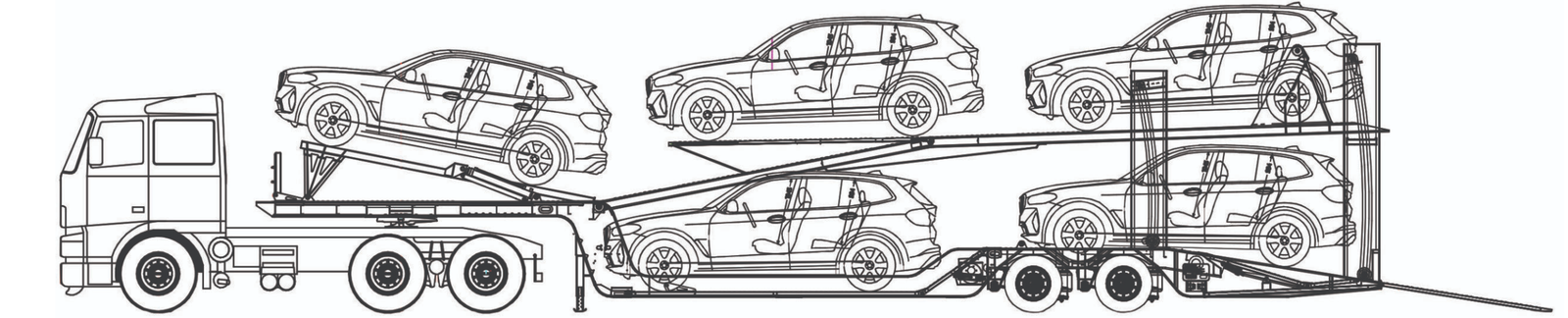
Designed for efficient vehicle transport, this car carrier trailer combines a strong steel structure with flexible loading configurations for moving multiple passenger vehicles safely and securely.
The multi-level deck arrangement maximises carrying capacity while providing practical access for loading and unloading. Tandem-axle and single-axle configurations are available to suit different fleet requirements and vehicle combinations.
Depending on vehicle size and arrangement, the trailer can transport up to six small vehicles, five large vehicles, or a mixed load of four small and three large vehicles.
Best suited for passenger vehicles, SUVs, pickups, and light commercial vehicles that need safe multi-vehicle transport.
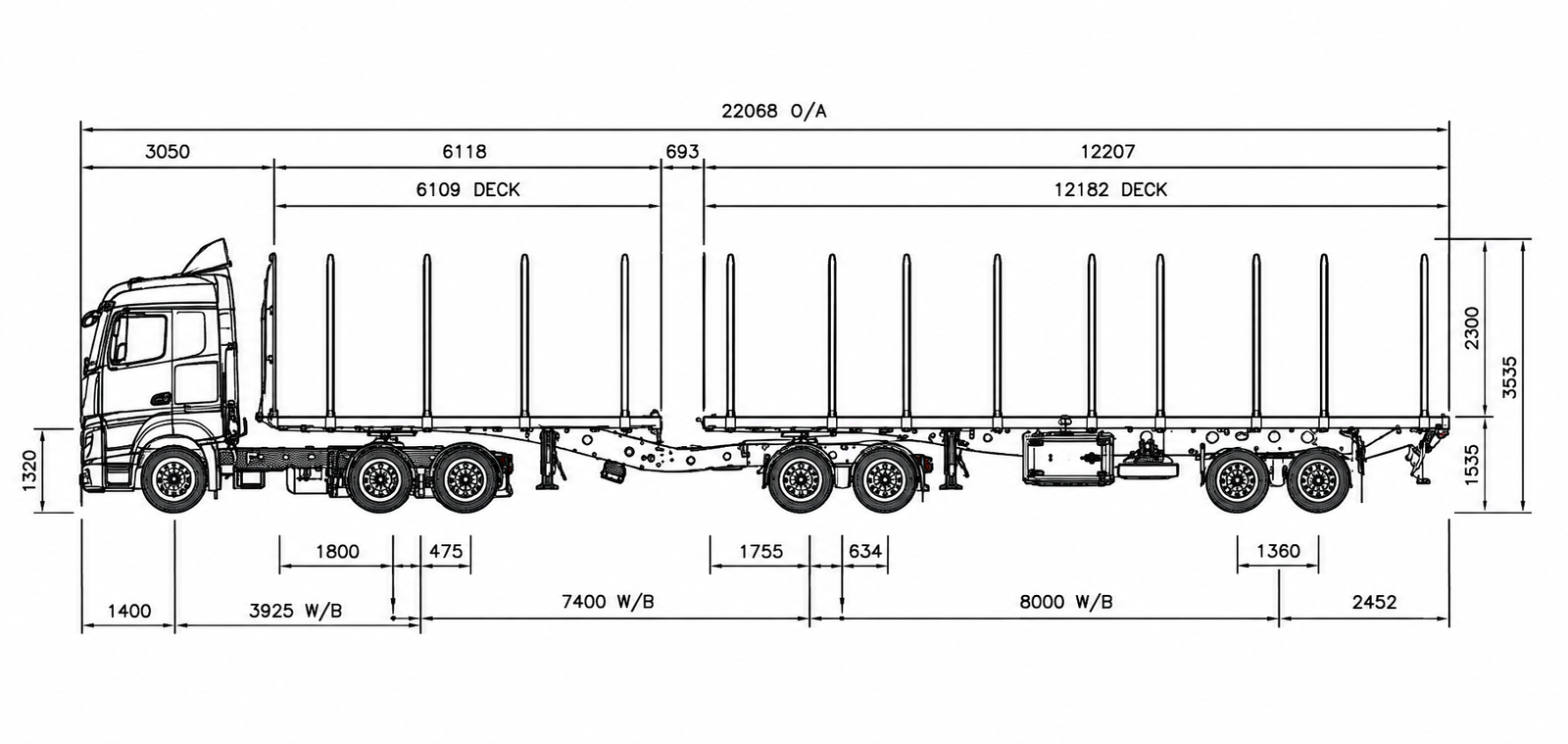
Flatbed trailers are useful for automotive parts, machinery, workshop equipment, engines, body panels, crates, pallets, tyres, and irregular automotive cargo. Their open platform allows flexible loading by forklift, crane, or side access.
Best suited for palletised, crated, bulky, or irregular automotive cargo that needs open-platform loading.

Container or skeletal trailers are commonly used for imported automotive parts, tyres, batteries, engines, accessories, and vehicle components packed in shipping containers. They support port-linked and cross-border automotive supply chains.
Best suited for containerised automotive parts, imported components, accessories, and port-linked cargo.
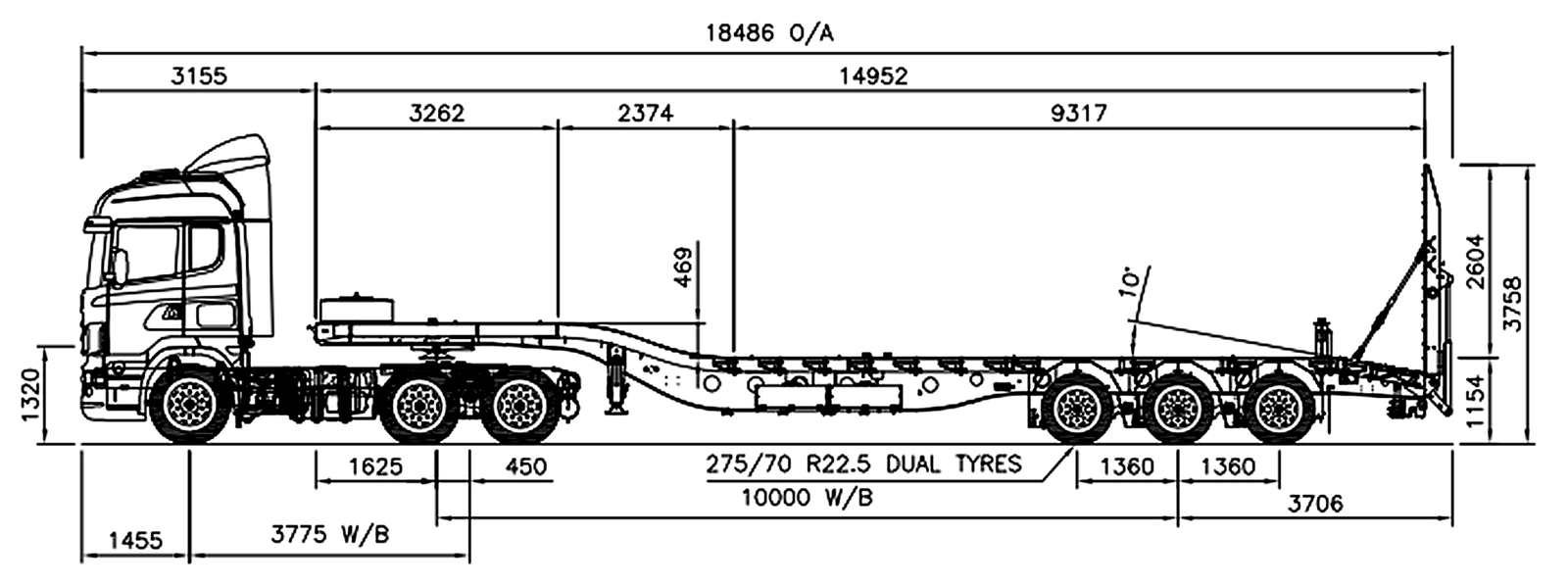
Lowbed trailers can be used for heavy automotive cargo such as buses, trucks, abnormal vehicles, damaged vehicles, plant vehicles, or heavy workshop machinery. Their lower platform helps move tall or heavy units more safely on suitable routes.
Best suited for heavy, tall, non-running, or abnormal automotive cargo that requires stable low-platform transport.
Core, regional, and Zimbabwe local automotive routes shown together with a clear colour system.
Automotive cargo may include passenger vehicles, SUVs, pickups, trucks, buses, trailers, spare parts, tyres, batteries, engines, gearboxes, body panels, accessories, workshop equipment, containers, and commercial vehicle components.
Car carrier trailers are commonly used for vehicles, flatbed trailers are used for parts and bulky cargo, container or skeletal trailers are used for containerised imports, and lowbed trailers are used for heavy or abnormal vehicles.
Car carrier trailers are suitable for moving multiple passenger vehicles, SUVs, pickups, and light commercial vehicles between ports, borders, dealerships, auction yards, and fleet depots.
Container trailers are suitable for imported spare parts packed in containers, while flatbed trailers can support crated, palletised, or bulky parts such as engines, tyres, body panels, and workshop equipment.
Lowbed trailers are suitable for heavy, tall, damaged, non-running, or abnormal vehicles that require stable low-platform movement.
Yes. Automotive cargo may require vehicle inspection, loading checks, cargo securing, customs documentation, insurance coordination, route planning, border clearance, and damage-prevention measures.
Yes. Local routes can support movement between borders, warehouses, dealerships, workshops, fleet depots, auction yards, insurers, and customer delivery points.
Yes. Automotive cargo can move through regional corridors connecting Zimbabwe with South Africa, Mozambique, Zambia, Botswana, Malawi, and other SADC markets, depending on cargo type, documents, and route requirements.
Common automotive corridors include South Africa to Beitbridge to Harare, the Beira Corridor, the Maputo Corridor, and the North–South Corridor. These routes support vehicles, parts, tyres, batteries, commercial vehicle supply, and regional distribution.
Important details include cargo type, number of vehicles or parts, weight, dimensions, running condition, loading point, delivery point, route, documentation, insurance needs, loading method, unloading method, and delivery timeline.


End-to-end freight, courier, warehousing, and cross-border support for every shipment.
Services