Load profile & measurement
Review the length, weight, format, bundle arrangement, collection point, and handling requirements.
Logs, poles, sawn timber, and containerised wood products moved across plantations, sawmills, processors, and ports.
Timber transport has to respect the load—its length, weight, balance, restraint needs, route, and the conditions waiting at the other end.
From the bush to a mill, yard, construction supplier, border, or port, we align the right equipment and movement plan to keep the operation moving.
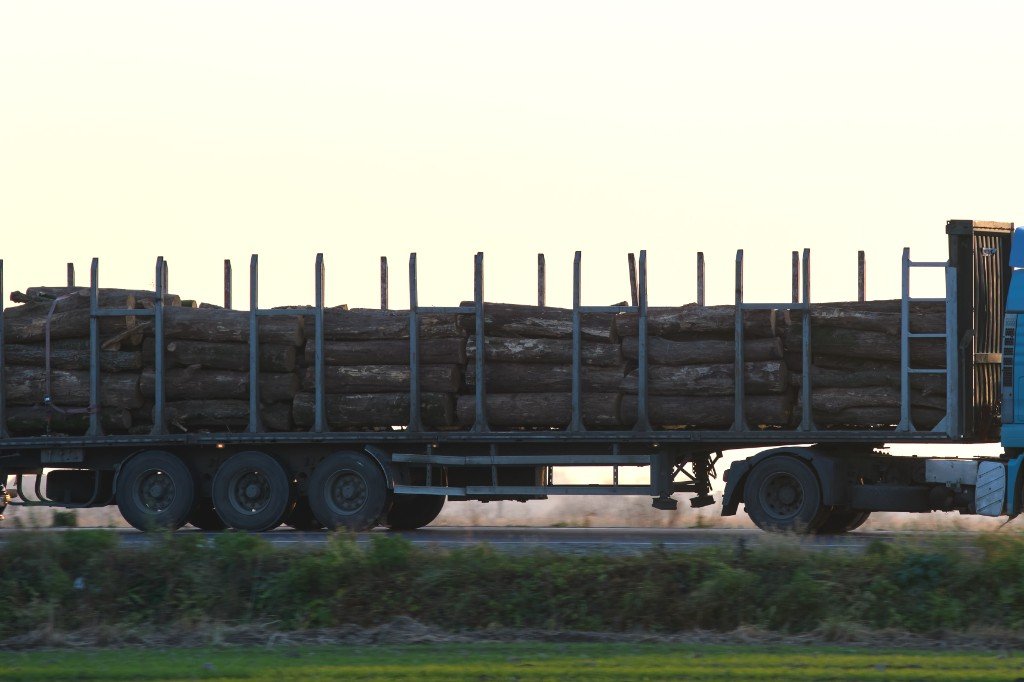
We build every movement around the actual material, equipment, collection environment, road conditions, and destination requirements.
Review the length, weight, format, bundle arrangement, collection point, and handling requirements.
Plan loading, load balance, securing, access, and the controls needed for safe movement.
Match the trailer, vehicle, route, permits, and timing to the load and operating environment.
Coordinate the right final handover at the mill, processing yard, construction site, border, or port.
We support the materials, locations, and connections that take forestry cargo from source through to processing, supply, and export.
Raw timber loads planned around profile, length, balance, restraint, and access.
Processed materials supported with the right loading, protection, and delivery plan.
Practical movement between forestry source locations, processors, and storage facilities.
Links to construction supply chains, regional delivery points, and export-related facilities.
Share the timber type, length, weight, bundle arrangement, collection point, delivery point, target date, and any loading or access requirements.
Forestry and timber transport often requires trailers that can handle long cargo, heavy logs, processed timber, poles, and bulk wood materials. The right trailer depends on whether the cargo is raw, processed, bundled, palletised, loose, containerised, or export-ready.
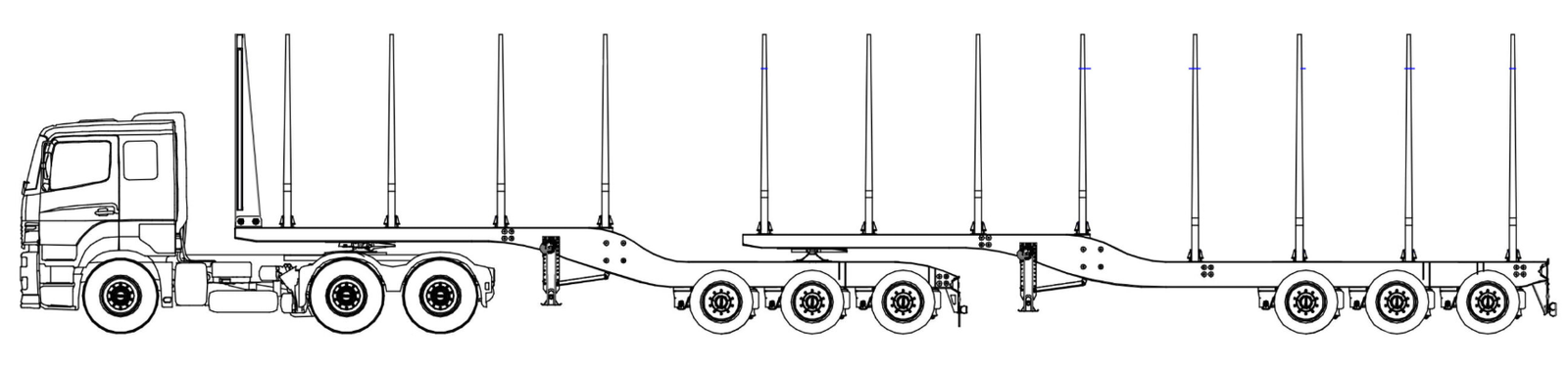
Designed for forestry and timber transport, this timber carrier trailer provides the strength, stability and durability required for hauling long, heavy logs across demanding terrain and over long distances.
A high-tensile steel chassis, reinforced bunks and heavy-duty stakes help secure timber loads and maintain stability during transport. The robust structure is built to withstand harsh operating conditions, repeated loading cycles and rugged forestry environments.
Optional bolsters can accommodate different timber sizes, while self-steering axles can improve manoeuvrability in confined areas and on challenging routes.
Best suited for raw logs, poles, and round timber that require secure long-load transport.
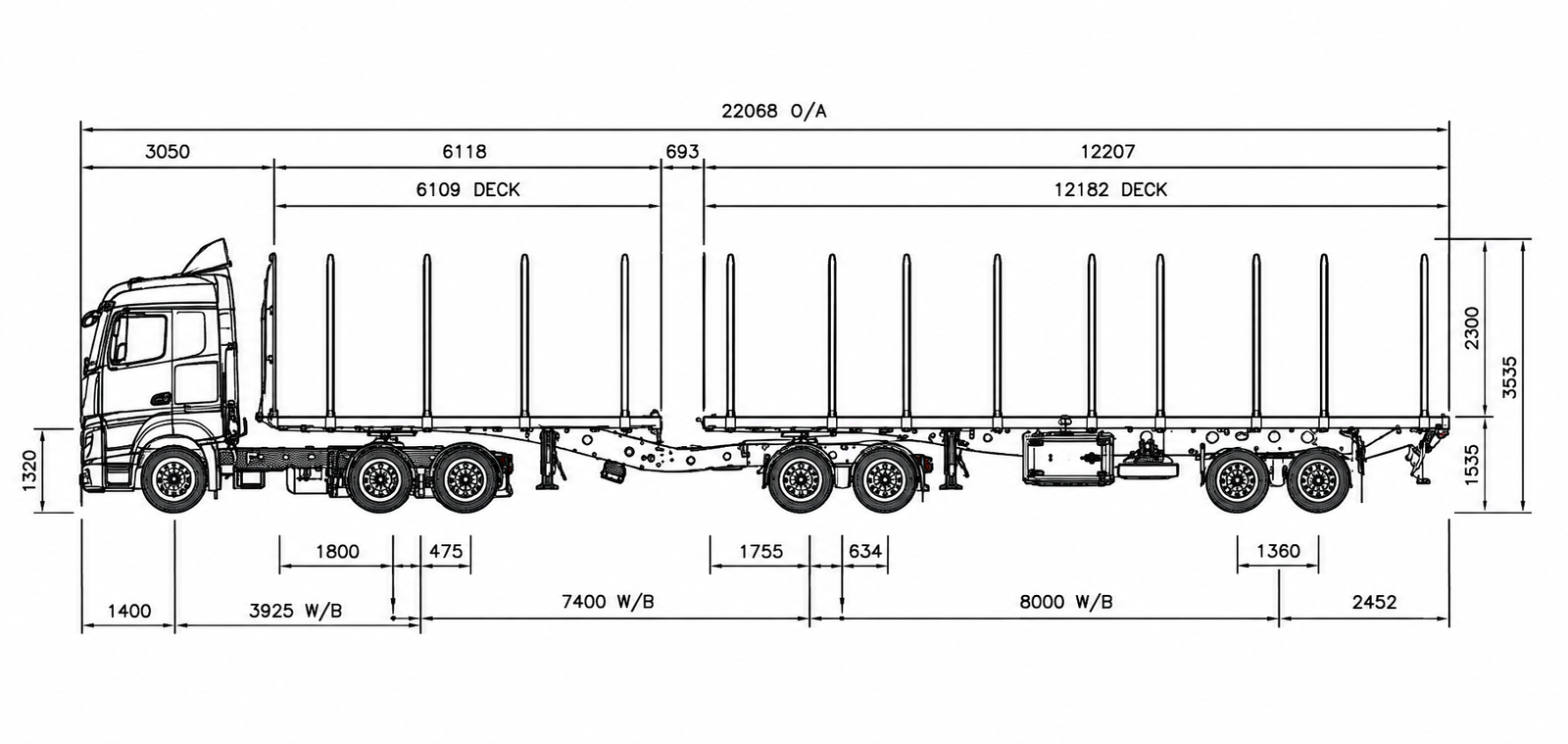
Flatbed trailers are widely used for sawn timber, boards, plywood, treated timber, pallets, crates, timber beams, and construction wood products. Their open platform makes them useful for bundled, strapped, or palletised wood loads.
Best suited for processed, bundled, palletised, or irregular timber products that require open-platform loading.
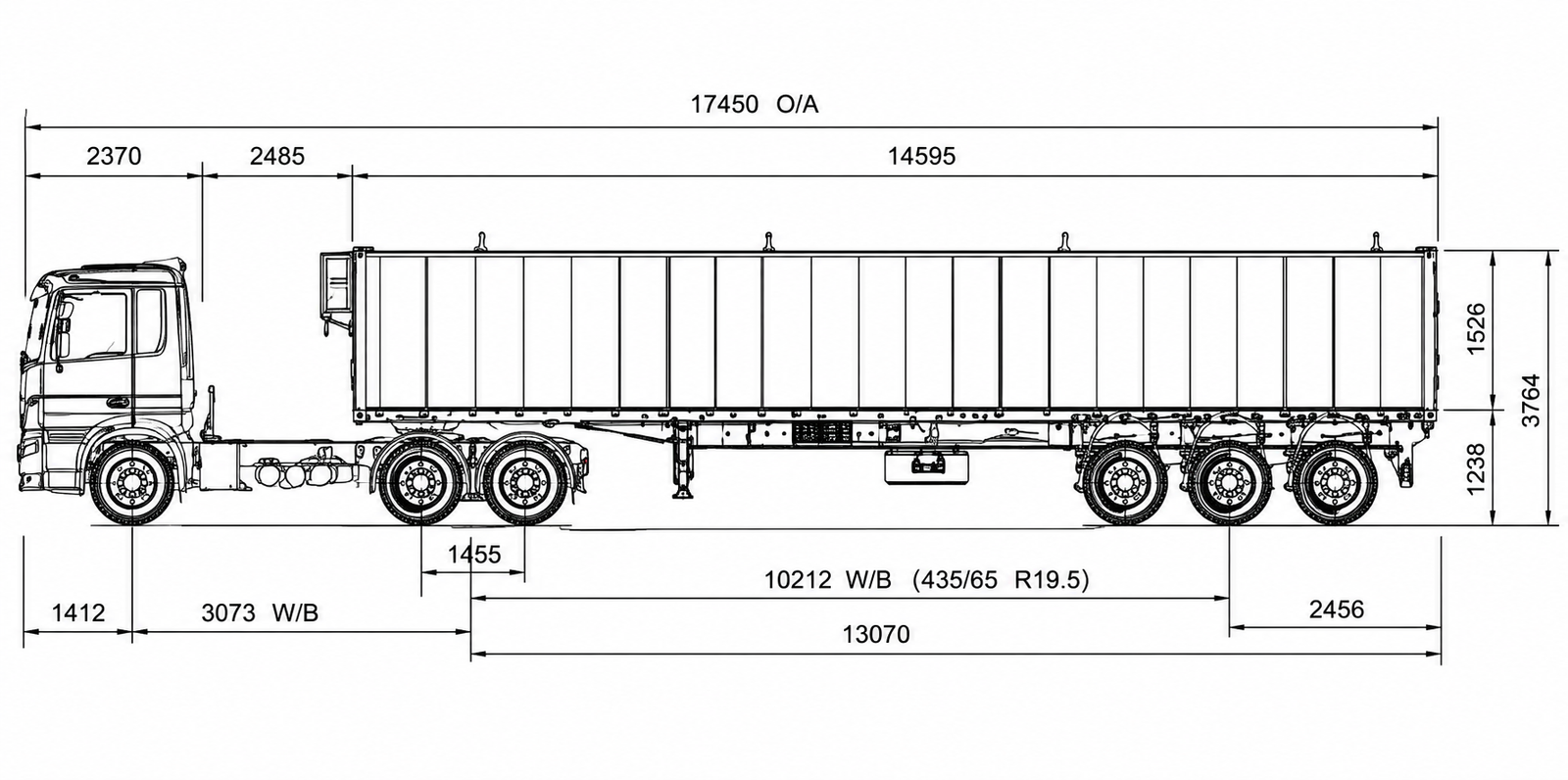
A 65 m³ moving floor semi-trailer for high-volume wood chips, biomass and loose forestry materials.
Best suited for wood chips, biomass and loose forestry materials requiring controlled unloading.

Container or skeletal trailers are commonly used for export-ready timber, packaged wood products, furniture components, pallets, boards, and processed timber moving in shipping containers. They support port-linked and cross-border timber logistics.
Best suited for containerised timber, export shipments, and packaged wood products moving through ports or border routes.
Forestry and timber cargo often moves between plantations, sawmills, processors, warehouses, construction suppliers, border points, and ports. These routes support raw timber movement, processed wood distribution, construction supply chains, imports, exports, and regional trade.
Plantations → Mutare / Nyanga / Chimanimani → Sawmills / Processors
Manicaland is the centre of Zimbabwe's plantation forestry activity, with timber movement commonly linked to plantations, sawmills, wood processors, treatment plants, and storage yards in and around the Eastern Highlands , supporting the movement of logs, poles, sawn timber, boards, and forestry equipment.
Sawmills / Processors → Harare / Bulawayo / Gweru
Supports the movement of processed timber, boards, plywood, poles, pallets, and construction timber from forestry and processing areas into Zimbabwe's main commercial, construction, and industrial markets.
Mutare / Harare → Beira Port
Connects Zimbabwe to the Port of Beira in Mozambique. Useful for export-ready timber, containerised wood products, imported equipment, sawmill machinery, packaging, and port-linked forestry logistics.
Johannesburg → Beitbridge → Harare → Lusaka → Copperbelt
Supports regional movement between South Africa, Zimbabwe, Zambia, and the Copperbelt. For forestry and timber logistics, it can support processed timber, poles, wood products, construction materials, machinery, and regional distribution.
Johannesburg / Gauteng → Maputo Port
Links South Africa's industrial regions to the Port of Maputo. Can support timber-related cargo, wood products, machinery, construction materials, imports, exports, and regional distribution across Southern Africa.
Forestry and timber transport can support logs, poles, sawn timber, plywood, boards, treated timber, pallets, crates, furniture components, timber beams, wood chips, forestry machinery, equipment, and containerised wood products.
Timber or log trailers are commonly used for raw logs and poles, flatbed trailers are used for sawn timber and processed wood products, and container or skeletal trailers are used for containerised export cargo.
Timber or log trailers are suitable for logs, poles, and roundwood because they are designed for long, heavy timber loads that need secure stacking, strapping, and transport.
Flatbed trailers are suitable for sawn timber, plywood, boards, treated timber, pallets, beams, and bundled construction timber because they provide open-platform loading and flexible cargo handling.
Container or skeletal trailers are suitable for export-ready timber and packaged wood products that are loaded into shipping containers and moved between processors, warehouses, borders, and ports.
Yes. Timber cargo may require load securing, weight checks, route planning, site access checks, weather protection, over-length load planning, documentation, and careful handling to reduce cargo damage.
Yes. Local forestry routes can support movement from plantations to sawmills, treatment plants, processors, warehouses, construction suppliers, furniture manufacturers, and local markets.
Yes. Timber-related cargo can move through regional corridors connecting Zimbabwe with Mozambique, South Africa, Zambia, Botswana, Malawi, and other SADC markets, depending on cargo type, documentation, and route requirements.
Common forestry and timber routes include Manicaland forestry routes, Mutare-to-Harare/Bulawayo distribution routes, the Beira Corridor, the North–South Corridor, and the Maputo Corridor. These routes support timber distribution, imports, exports, and regional trade.
Yes. Inbound movement can include forestry equipment, machinery, spare parts, treatment products, packaging, and imported wood products. Outbound movement can include logs, poles, processed timber, boards, furniture components, pallets, and export containers.
Important details include cargo type, length, weight, volume, packaging method, loading point, delivery point, route, loading method, unloading method, site access, documentation, and whether the cargo is raw, processed, bundled, or containerised.


End-to-end freight, courier, warehousing, and cross-border support for every shipment.
Services