Cargo & payload profile
Understand the load, weight, dimensions, handling method, and any abnormal requirements.
Project cargo, abnormal loads, and Copperbelt corridor freight handled by one team from planning to delivery.
Mining land transport support for mining companies, contractors, suppliers, traders, and industrial operators moving cargo across Zimbabwe, the Copperbelt, and the wider SADC region.
From bulk materials and consumables to machinery, containers, and abnormal loads, the plan has to work for the mine, the route, and the delivery point.
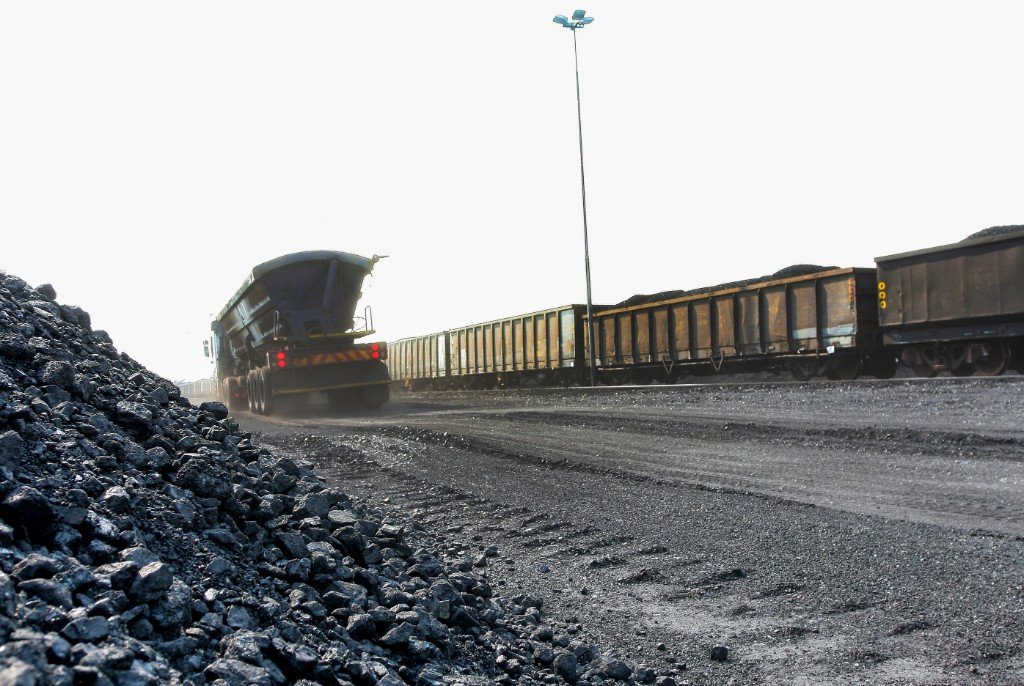
Mining freight depends on the right payload profile, access plan, equipment match, and delivery controls—not a standard road movement.
Understand the load, weight, dimensions, handling method, and any abnormal requirements.
Assess site access, loading conditions, permits, border requirements, and corridor infrastructure.
Deploy the trailer and handling equipment suited to the load and operating conditions.
Coordinate movement, monitoring, site handover, and final delivery with operational control.
We help connect mine sites, processing plants, workshops, warehouses, borders, ports, suppliers, and markets with practical land transport options.
Bulk materials, concentrates, ore, coal, chrome, lime, gypsum, and related mining cargo.
Heavy equipment, plant components, containers, and oversized loads moved with precision.
Time-sensitive consumables, parts, and industrial supplies that keep operations moving.
Regional corridors, Copperbelt routes, port-linked imports, and outbound mineral logistics.
Tell us the cargo type, weight, dimensions, loading point, delivery point, site access requirements, required date, and any special handling or permit needs.
Mining transport often requires trailers that can handle heavy loads, loose materials, rough operating environments, and project-based cargo. The right trailer depends on the type of material, weight, loading method, road conditions, delivery point, and unloading requirements.
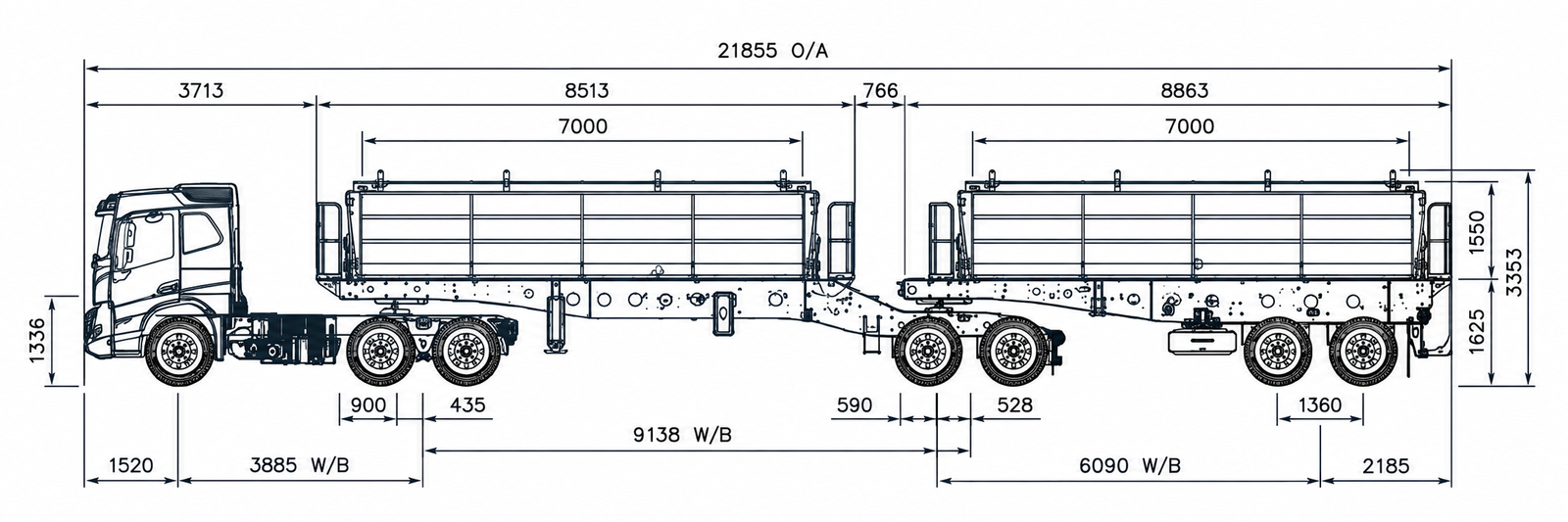
Designed for demanding bulk-haul operations, this 45 m³ tandem/tandem axle side-tip interlink delivers a strong balance of payload capacity, durability and operational efficiency.
The 3 mm high-tensile steel bins are built to withstand harsh working conditions, while the air-suspension system supports improved stability, ride quality and load protection. Twin-line braking with 24 V ABS, a tyre-inflation system and PVC top covers add safety, convenience and dependable day-to-day performance.
With a payload capacity of 36,900 kg and a robust interlink configuration, this trailer is well suited to mining, aggregates, construction and agricultural transport.
Built for tough loads, reliable performance and more productive trips.
Best suited for bulk mining materials that require efficient loading, hauling, and side discharge.
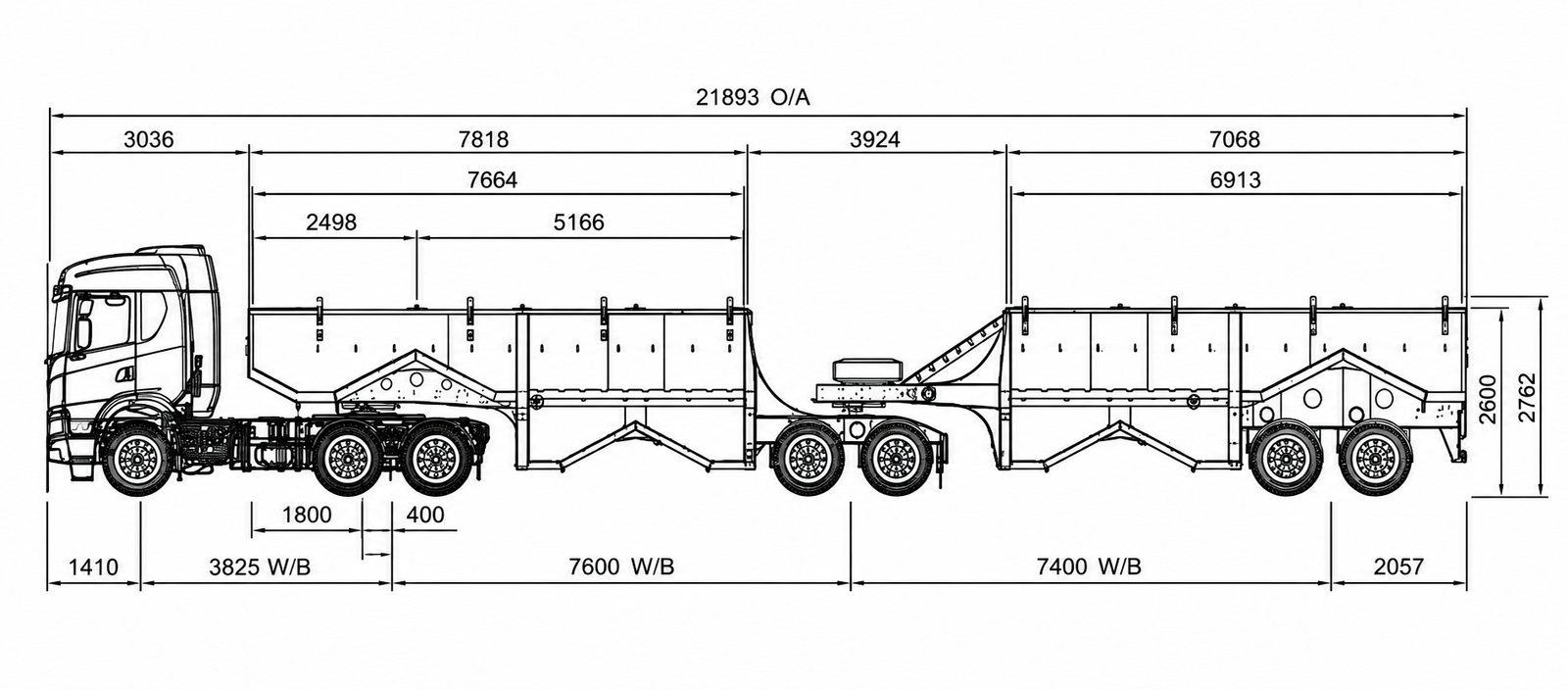
A 52 m³ bottom dump interlink designed for controlled discharge of free-flowing mining and bulk materials.
Best suited for free-flowing mining materials requiring stable, controlled bottom discharge.
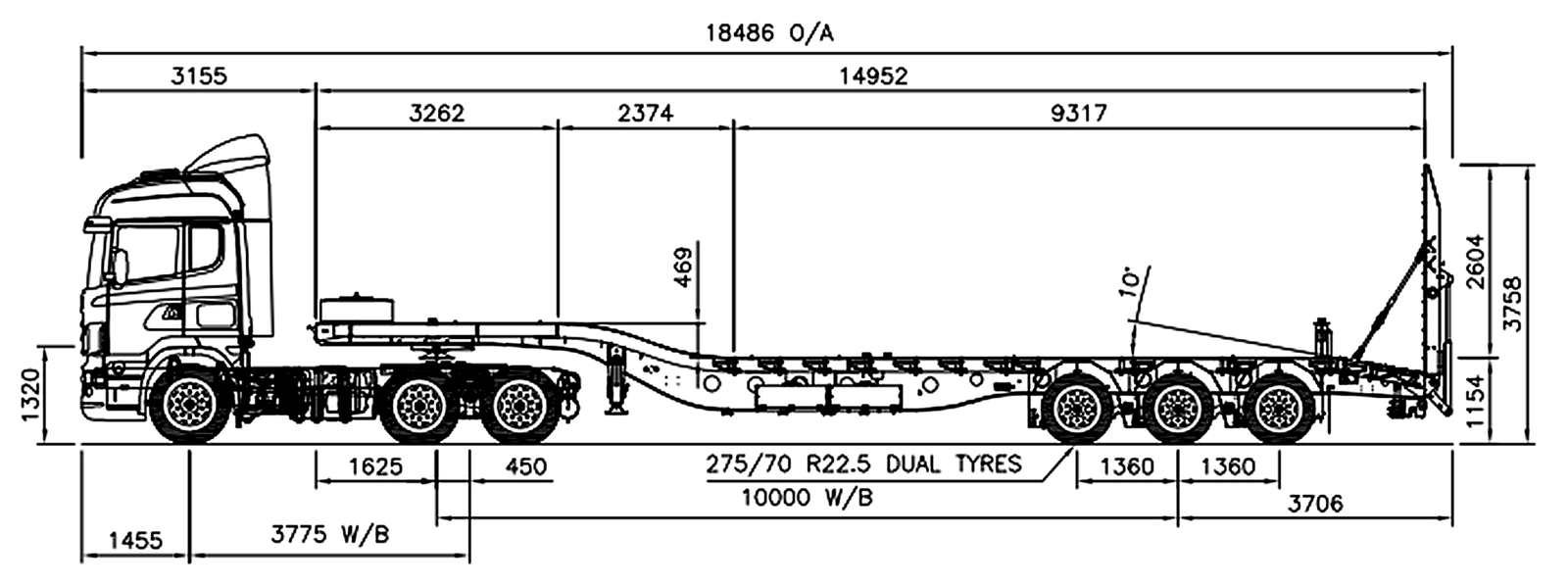
Lowbed trailers are commonly used for transporting heavy mining equipment and oversized machinery. Their low platform makes them suitable for moving equipment that is too tall, wide, or heavy for standard trailers.
Best suited for heavy, oversized, or abnormal mining equipment that requires stable low-platform transport.
Core, regional, and Zimbabwe mining-belt routes displayed together using real road geometry.
Mining transport can support bulk minerals, ore, coal, chrome, aggregates, mining equipment, machinery, spares, consumables, containers, generators, compressors, and project cargo.
Side tipper trailers are commonly used for bulk minerals and loose materials, while lowbed trailers are commonly used for heavy machinery and oversized mining equipment.
Side tipper trailers are commonly used for bulk materials such as ore, coal, chrome, aggregates, sand, and gravel because they allow efficient loading, hauling, and discharge.
Lowbed trailers are suitable for heavy and oversized mining equipment such as excavators, loaders, bulldozers, drilling rigs, crushers, screeners, generators, and compressors.
Yes. Local mining routes can support movement between mine sites, processing facilities, industrial hubs, warehouses, suppliers, workshops, railheads, border points, and storage yards.
Yes. Mining cargo can move through regional corridors connecting Zimbabwe with South Africa, Mozambique, Zambia, Botswana, Malawi, and other SADC markets, depending on cargo type, documentation, and route requirements.
Common mining transport corridors include the North–South Corridor, Beira Corridor, Maputo Corridor, and Nacala Corridor. These routes support mining supplies, equipment, bulk cargo, imports, exports, and regional trade.
Yes. Inbound mining movement can include imported equipment, spares, machinery, chemicals, consumables, and project cargo. Outbound movement can include minerals, processed materials, equipment returns, and cargo moving to buyers, ports, or regional markets.
Yes. Mining cargo may require route checks, loading plans, permits, escort planning, site access checks, weight considerations, border documentation, and careful planning around road conditions and delivery timelines.
Important details include cargo type, weight, dimensions, loading point, delivery point, preferred route, loading method, unloading method, site conditions, border requirements, and delivery timeline.


End-to-end freight, courier, warehousing, and cross-border support for every shipment.
Services